

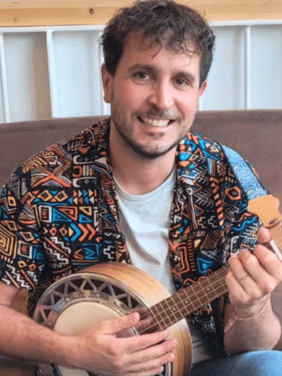
Pascal BUIS
Project Leader for La Grange à Gaby (Third Place)
It’s sort of the culmination of what we’ve always wanted: to create a gathering place that highlights culture, inclusion, and diversity.
In the Vercors, an old barn becomes the beating heart of the village
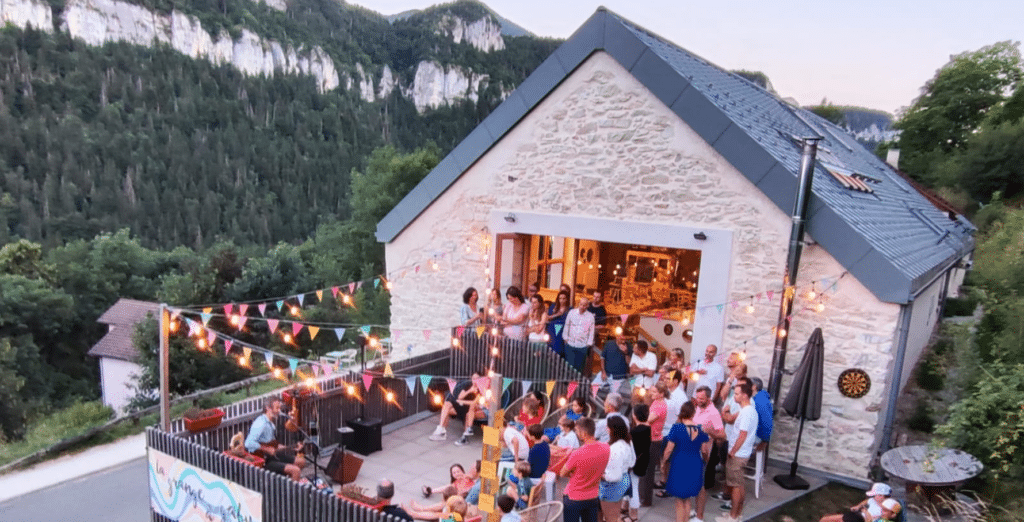
In the small village of Engins, with barely 400 residents and without a local store for over thirty years, an unconventional space is breathing new life into the community and fostering social connections: La Grange à Gaby, a “third place” that combines a games café, a cultural bistro, a stopover inn, creative cuisine, a convenience store, and live performances.
Behind this project, Pascal, Estelle, Marion, and Clément took on a bold challenge: to recreate a vibrant space, open to all, in the heart of a region where opportunities to come together had become rare.
A call for proposals that became a life’s work
It all began in 2011, when the town hall purchased an old barn in the centre of the village. Long left abandoned, it became the foundation for an ambitious project to revitalize the area and develop tourism. The town then issued a call for proposals.
In 2023, Pascal and his partner, Estelle, took up the torch.
Capitalizing on their experience as trainers and deeply involved in the nonprofit sector, they saw an opportunity to create a space that reflected their values: bringing people together and celebrate art and diversity.
In just a few months, their application was approved and the project was able to get underway. It was a somewhat rushed launch, but thanks to their experience from previous projects—and in particular the support provided by France Active Isère—La Grange à Gaby was able to get off the ground.
An intergenerational and inclusive space
What sets this place apart is the diversity of its visitors. Located in a very rural area, La Grange à Gaby attracts both village residents and passing hikers. “It’s not uncommon to see young people arrive on horseback or farmers pull up in tractors to grab a coffee,” smiles Pascal. On weekends, many tourists are drawn to the place by its friendly atmosphere and authenticity.
A tradition quickly took root: with each change of season, the village’s elder women organize creative workshops for children, during which they decorate the tree that stands at the entrance to the venue. It’s a simple yet symbolic ritual that perfectly embodies the spirit of the place: sharing, passing on traditions, and camaraderie.
While most residents have embraced La Grange à Gaby, some reservations remain. Some are hesitant about the vegetarian menus or the daring cultural programming, particularly the drag nights. Pascal laughs it off but acknowledges that “the biggest challenge is convincing the locals—who are used to keeping to themselves—to open up and connect with others.” But these discussions also show that the village is coming back to life.
A close-knit team, challenges ahead
Over time, various workers joined the team, eventually forming the current four-person team, each with their own skills and personal touch. “We learned everything on the job, but we all share that same drive: to create sociocultural events that bring people together,” says Pascal.
Together, they chose the SCOP (Cooperative and Participatory Society) model so that everyone has a say in decisions and the venue’s governance remains collective and horizontal. After two years in operation, the team says it is beginning to find its rhythm and is entering a phase of stabilization.
The project is certainly ambitious. In collaboration with the tourism office and local organizations, La Grange à Gaby plans to develop hiking trails around the village, organize festivals, and, above all, expand its lodging capacity to accommodate more visitors. The upcoming arrival of a new municipal team, composed of younger candidates, could offer new opportunities for development and further modernize the site.
More stories
Discover more stories from inspiring entrepreneurs