
Content typology :
Story
A project by France Active Nouvelle Aquitaine

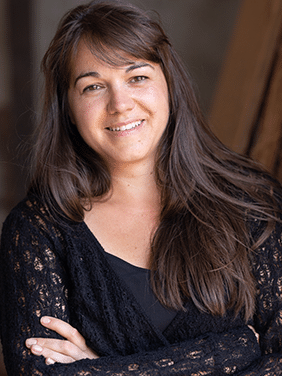
Maud SIMIAN

Coordinator of the Barétous cooperative (SCIC) (Production of meat for butcher shops)

Industry sector :
Ance Féas (64)

“France Active helped us really get a handle on things. We had to look at the numbers, ask ourselves the right questions, and that helped us structure the project. At first, we were moving forward somewhat on instinct, but thanks to their support, we were able to clarify the financial structure and understand how to make it all viable.”

Lieu :
Nouvelle-Aquitaine
Pyrénées-Atlantiques (64)
Sector :
Local shops & services

A guarantee of

€49,740


An investment of

€82,900


Supported by

France Active Nouvelle Aquitaine

What if we raised pigs together?

In Ance Féas, in the Pyrenees, a collective of farmers took on a bold challenge: pooling their resources to create a cannery and a store for their meat. At the heart of the project were five producers united by the idea of “closing the loop”: raising, processing, and selling through short supply chains.

The birth of a project

The project stemmed from a simple yet crucial observation: hundreds of hectares of unused communal land were deteriorating before their very eyes due to a lack of animals to maintain it. The idea of putting these 600 hectares to good use by raising pigs outdoors quickly emerged as a viable solution. 

However, a major obstacle stood in the way: the lack of a meat-processing facility within a one-and-a-half-hour drive. For the farmers, this represented a considerable waste of time and a significant financial cost. The idea of opening a cannery then came to the fore. 

The town hall played a key role by providing and renovating a building to house the cannery. Initially intended solely for processing pork from the founding farmers, the opening of the processing facility quickly attracted other producers facing the same logistical challenges. The project was designed to process approximately 100 metric tons of meat per year, thereby serving a broader community of pig farmers.

At the same time, a store is managed by an association of local producers, ensuring the direct sale of processed products. The project has thus come full circle: an association that raises pigs, processes them, and markets the products in a store.

An economic and social impact

The organization’s primary goal is to support the local economy and create momentum in the village.

In terms of employment, the project has led to the hiring of five locally recruited individuals, directly contributing to sustaining economic activity in the valley. The store, located on a busy road, has quickly built a loyal customer base.

In addition to the economic aspect, the project has enjoyed strong community support, with 60,000 euros in funds raised by village residents for the cannery, demonstrating local commitment to this initiative.

The challenges of implementation and support from France Active

While the idea brought people together, bringing it to fruition took four years of work. The main challenges were financing and teamwork. The difficulty in securing bank financing—despite having obtained regional grants—was particularly trying for the project’s founders.

Faced with these difficulties, support from France Active was sought. The association stepped in to guarantee the bank loan and demanded a level of detail and rigor in the financial arrangements that forced the project leaders to ask themselves the right questions. The support also focused on issues of governance and the Social and Solidarity Economy (SSE).

Governance, environment, and outlook

The choice of a SCIC (cooperative society of collective interest) reflected the collective nature of the project and the desire to include the City Council in the structure. Although establishing the governance framework was complex, it proved fundamental to the project’s democratic character. The City Council’s involvement in the structure was also a reassuring factor for the banks.

From an environmental perspective, the project is strongly committed to free-range livestock farming. Far from industrial areas, pig farming on communal lands is carried out with minimal environmental impact, at a density of fewer than 10 pigs per hectare, thereby making effective use of land that would otherwise be left untended.

Furthermore, the supply chain is ultra-local, with animals born nearby and a slaughterhouse located just a quarter of an hour from the cannery. 

The goal for the future is clear: to grow in order to meet projected targets and ensure the organization’s long-term viability, so that it can continue to support the local economy and its residents.