
Faced with uncertainty, saving continues to grow and is becoming a civic act among young people.
Solidarity Finance Week from 10 to 16 November 2025
To mark the Solidarity Finance Week 2025 (10–16 November 2025), France Active and FAIR are publishing the 4th edition of their annual OpinionWay survey, ‘The French and solidarity-based savings’. Against a backdrop of economic and political instability, French people are stepping up their savings efforts and increasingly want their money to contribute to creating benefits for the society and the environment.
62% of French people plan to save as much or more in 2026 than in 2025 (+7 points vs. 2024)
29% of those concerned say that the pension reform is encouraging them to save more (+15 points)
24% say that their savings are primarily intended to finance solidarity projects (+4 pts), including 37% for the Generation Z.
37% consider their savings choices to be a form of ‘voting’, 65% for the Generation Z
The fear of the future is increasingly driving the French to save
Four out of five French people plan to save in 2026 (78% of respondents, +5 points compared to 2025), a record high. Nearly two-thirds of the respondents plan to save as much or more than in 2025 (62%, +7 points).
Surprisingly, this trend is also very strong among 18–24-year-olds: 71% say they want to save as much or more.
The fear of the future is the main reason cited by those who plan to save more in 2026 (50%, +4 points), a trend reinforced by political and economic instability in France.
Similarly, the current context surrounding the pension reform and the resulting uncertainties are driving French people to save even more (29%, +15 points).
In this tense economic climate, nearly 70% of the French people favour short- or medium-term profitability targets: 28% between 0 and 3 years, and 41% between 3 and 8 years (+7 points).
Solidarity savings are gaining ground, driven largely by young people
Despite this widespread concern, one in four French people say that their savings are directed towards financing social and environmental projects (24%, +4 points). This proportion rises to 37% among the Generation Z and 31% among Millennials.
The selection criteria confirm the difference in sensitivity: while capital security remains a priority (53% ‘overall’; 31% ‘first’), social and environmental impact is much more important to young people (28% of 18–24-year-olds cite impact among their criteria, compared to 8% of those aged 50+).
In terms of project types, savers would like to prioritise investing their savings in ecological transition (26%), preserving social ties and reducing inequalities (20%), on a par with the economic development of regions, particularly those located in priority or disadvantaged areas (20%).
Despite this interest, around 2 in 3 French people say they are poorly informed about solidarity-based savings products, returns and projects (65%), hence the importance of continuing and stepping up efforts to educate savers.
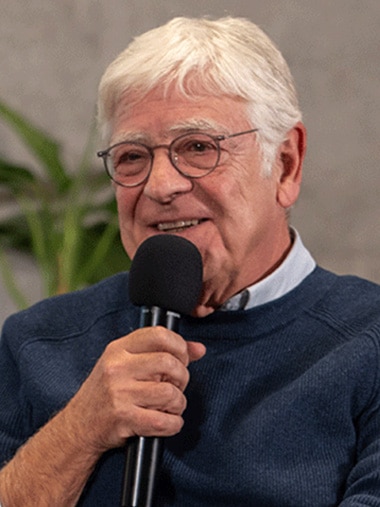
« These results confirm two realities: on the one hand, French people are saving more to protect themselves against uncertainty; on the other hand, they want their money to have meaning. This is precisely France Active’s mission: to enable every saver to become a player in a more socially responsible future by supporting entrepreneurs who are responding to our country’s social and environmental challenges. To achieve this, we are campaigning to ensure that everyone has access to all types of investments, including life insurance, and can thus contribute to solidarity-based savings. We also defend the idea of universal employee saving schemes: currently reserved mainly for large companies, in future they should benefit all employees.»
Pierre-René LEMAS
President of France Active
Saving is voting’: a generational reflex
For the first time this year, FAIR, France Active and OpinionWay surveyed French people on their perception of saving as a civic act. The result: 37% are aware that their savings choices have an impact on the future of the society, and that saving is voting, provided that it is invested in socially responsible products.
This belief is particularly strong among the Gen Z (65%) and nearly one in two Millennials (47%).
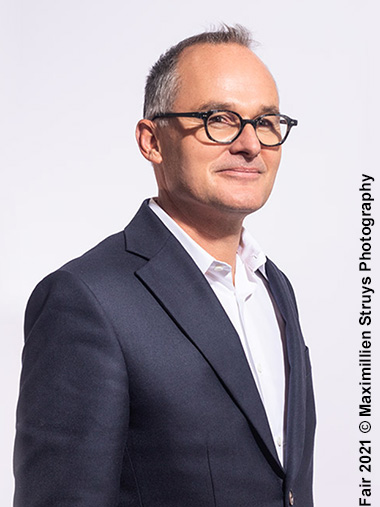
« Savings intentions have never been so high in our country. Young French people have also understood that saving is no longer just about coping with uncertainty, it is about taking action. Today, nearly 40% of them want to give meaning to their money by supporting projects that respond to the challenges of our time – ecological transition, social cohesion, regional development. For them, saving is no longer just an investment, but a tool for building tomorrow’s society.
Patrick SAPY
Solidarity finance has been drawing on this energy for 40 years: every saver has the power to become an agent of change by choosing where to invest his money. Because saving, tomorrow, will also mean voting for the world we want to live in.»
Chief Executive Officer of FAIR
Methodology
The survey ‘The French and solidarity-based savings’, conducted for France Active and FAIR by OpinionWay, aims to understand and analyse French people’s opinions on solidarity-based savings investments. This study was conducted among a sample of 1,009 people, representative of the French population aged 18 and over, selected using the quota method based on criteria such as gender, age, socio-professional category, type of urban area and region of residence. The interviews were conducted on 11 and 12 September 2024 using a self-administered online questionnaire on a CAWI (Computer Assisted Web Interview) system.
Plus d'actualités
Find out more about the latest news from France Active.